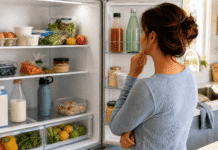



Everything about buying and cooking food in this country assumes you’re feeding a household. Recipes default to four servings, chicken breasts come in packs of six, and a single head of lettuce is three times what one person can reasonably eat before it turns to mush in the back of the fridge. If meal planning for one has ever felt harder than it should be, that’s because the entire system is working against you.

Whether you’re living alone by choice, newly single, or just tired of watching half a bag of spinach slowly decompose every week, more recipes won’t fix the problem. What you need is a system for how to buy, cook, and store food when you’re the only person at the table.
The Food System Is Rigged Against Solo Eaters
People who live alone throw away more food per-person than larger households, and the reason is baked into how groceries are packaged and sold. Research on household food waste patterns has consistently found that as household size increases, per-capita waste goes down. You’re probably no worse at planning than anyone else, it’s just that the food system wasn’t built for you.
Think about the math for a second. A bag of pre-washed salad greens is about 5 ounces, which works out to roughly three portions, but the greens start wilting after four or so days so you’re in a race against time. A bunch of bananas is five or six, and you’ll eat maybe three before the rest turn brown.
A standard recipe is generally for four servings, and halving it sounds simple until you realize you can’t easily halve an egg, that spice ratios get weird at smaller volumes, and that you end up with half-used cans and jars cluttering the fridge. The whole food ecosystem was built around families, and cooking for one means constantly fighting that default.
The NRDC’s city-level food waste study measured waste across three major US cities and found an average of 3.5 pounds per person per week. For someone living alone, that rate runs even higher because there’s nobody else in the household to absorb the surplus from a family-sized bag of carrots or a recipe that made four portions when you only needed one.
There are 38.5 million single-person households in the US right now, making up 29% of all households, up from 19% in 1974. The number keeps growing, but the food industry hasn’t caught up. Grocery stores still arrange everything around the assumption that you’re feeding at least two people, and most recipe sites still treat “serves 4” as the default.
The Cook-Once-Eat-Twice Rule
Most meal planning advice tells you to plan your meals, build a list, prep on Sunday, and cook through the week. While that advice usually works great, when you are cooking for one there’s one rule that trumps all of the others: every time you cook, you should be making at least two servings.
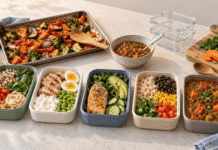
You eat one tonight and the second becomes tomorrow’s lunch or goes straight in the freezer. This one habit, more than any other, is what makes solo meal planning actually realistic. It means you’re only actively cooking three or four nights a week, but you’re eating home-cooked food almost every night. The leftover portion does the work for you on the nights you don’t feel like standing at the stove.
This changes how you choose recipes, too. Instead of looking for meals that scale down to one serving (which often means odd ingredient quantities and recipes that don’t quite work), you divide the four-serving meals by half and cook normal two-serving recipes and bank the extra. A pot of chili, a sheet pan of roasted chicken and vegetables, a batch of fried rice. These all produce two clean portions without any awkward math.
Over the course of two to three weeks, this habit builds a freezer stockpile almost without you noticing. By week three, you’ll have 6-8 different frozen meals stacked up, and that changes the entire dynamic. Dinner on a tired Thursday isn’t a $25 delivery order anymore. It’s picking something from the freezer and heating it up in a couple of minutes.
The cook-once-eat-twice approach works even better when you don’t have to decide what to cook in the first place. Eat This Much automatically creates a personalized meal plan with recipes that include leftovers, builds your grocery list, and makes meal planning for one take just a few minutes each week.
Shopping Strategies That Work for One
The grocery store is where solo meal planning either holds together or falls apart, and the standard advice about buying in bulk and stocking up on sales doesn’t really apply when half of everything you buy goes bad before you can use it.
Buy Loose, Not Bagged
This is the single most impactful shopping change for anyone cooking for one. Two carrots from the loose bin instead of a 2-pound bag. Three tomatoes instead of a clamshell of six. One bell pepper, not three in a shrink-wrapped pack. It feels minor, but it eliminates most of the fresh-produce waste that makes solo grocery shopping so frustrating. You’re buying exactly what you need for this week’s meals and nothing more.
Not every store makes this easy, though. Some have moved almost entirely to pre-packaged produce, and if yours is one of them, farmers’ markets and smaller grocery stores tend to be better for loose buying. It’s worth the trip if food waste has been a consistent problem.
Make Friends with the Freezer Aisle
Frozen vegetables deserve a much better reputation than they get. They’re picked and frozen at peak ripeness, so the nutritional content is comparable to fresh and often better than “fresh” produce that spent a week in transit before sitting on a store shelf for another three days. For solo cooks, the real advantage is portioning because you can pour out exactly what you need and put the rest back in the freezer.
Frozen proteins work the same way. A bag of frozen shrimp, individually frozen chicken breasts, or frozen ground turkey lets you pull out one serving at a time instead of committing to a family-sized pack that you have to use within two days.
Use The Butcher Counter Trick
If your grocery store has a butcher counter, use it. You can ask for a single chicken breast, two pork chops, or a quarter pound of ground beef. Most butcher counters will portion to whatever size you need, and it saves you from buying a full-size pack, using one piece, and freezing the rest in a giant clump that you’ll never actually defrost properly.
When full-size or family packs are significantly cheaper per pound and the savings justify it, buy the pack but repackage immediately. Single-serving portions in individual freezer bags, labeled with the date and contents. This takes five minutes after you get home from the store and prevents the “mystery meat” situation where unlabeled freezer bags pile up for months.
Build a Solo Pantry
The backbone of solo cooking is a pantry full of ingredients that don’t punish you for being one person. Canned beans, rice, pasta, eggs, jarred sauces, shelf-stable grains like quinoa, and whatever spices you actually use (not the 30-jar spice rack you bought once and forgot about). These form the base layer of dozens of fast meals, and they’ll wait patiently in your cabinet for weeks or months without going bad.
When combined with one or two fresh ingredients and a frozen vegetable, a well-stocked pantry can cover most weeknight dinners without a dedicated grocery trip.
Your Freezer Is Your Most Important Tool
Most meal planning advice treats the freezer as an afterthought, somewhere leftovers go when you can’t eat them fast enough. For solo cooks, the freezer needs to be the center of the entire system. It’s not where food goes to die. It’s your second pantry, the thing that makes the whole operation work.
The key habit is portioning everything into single servings before it goes in. Most people dump an entire pot of soup into one big container and then deal with the annoyance of defrosting and reheating a quantity they can’t finish in one sitting. Single portions mean you pull out exactly one meal and the rest stays frozen and ready for another night.
FoodSafety.gov’s cold storage charts are worth bookmarking for the fridge side of things (cooked poultry lasts 1-2 days, cooked meats and stews 3-4 days), but the freezer is where solo cooks get their real advantage. Most cooked meals keep for 2-3 months in the freezer without losing quality, which means your Tuesday chilli is still a perfectly good Thursday dinner six weeks later.
Label everything with the date and contents every time. A roll of masking tape and a Sharpie close to your kitchen counter is all it takes. Some people keep a running list on the freezer door, which solves the “I know there’s food in there but I don’t know what any of it is” problem that eventually leads to ordering takeout anyway.
How to Stay Motivated When Cooking for One

Cooking for one doesn’t carry the same social feedback loop as cooking for a family or a partner. There’s no one to appreciate the effort or sit across the table from, and honestly, on some nights the whole thing just feels pointless. A bowl of cereal or a delivery order wins by default, and no amount of Pinterest boards full of beautiful one-pot meals is going to change that.
This is the most underrated challenge in solo meal planning, and most advice ignores it because it’s not really a planning problem, it’s a motivation problem. The cook-once-eat-twice habit and the freezer stockpile exist specifically so that on the nights you don’t want to cook (and there will be plenty of them), you still have a home-cooked fallback that takes less time than opening a delivery app.
Plan at least one or two nights per week where you aren’t cooking on purpose. Not because you failed at the plan, but because the plan includes nights off. Leftovers, a freezer meal, eggs and toast, or takeout if you feel like it. These pre-scheduled breaks keep the rest of the week’s plan from collapsing when your motivation dips.
There is also something to be said about cooking for yourself. Cooking for one means zero compromise. Nobody else’s preferences, nobody else’s schedule, nobody else’s allergies or aversions dictating what’s for dinner. You eat what you want, when you want, and there’s a real freedom in that even if it doesn’t always feel that way.
A Week in the Life of a Solo Meal Planner
Here’s what a realistic week of solo meal planning could look like. The focus isn’t the specific recipes but the pattern of ingredient overlap, the cook-once-eat-twice rule in action, and strategic nights off.
Monday: Sheet pan chicken thighs with roasted broccoli and rice. Cook more rice than you need on purpose so you can use it for dinner tonight, and the extra rice carries forward to two more meals this week. (Active cooking time: 35 min.)
Tuesday: Black bean tacos with avocado, salsa, and Monday’s leftover rice. No real cooking involved, just assembly. (Active cooking time: 10 min.)
Wednesday: Fried rice using the last of the leftover rice, frozen stir-fry vegetables, an egg, and soy sauce. You can even make enough for two portions and freeze one. (Active cooking time: 15 min.)
Thursday: Night off. Grab something from the freezer stockpile, make breakfast for dinner, or order food without guilt.
Friday: Pasta with jarred marinara, ground turkey from the butcher counter, and a side salad. Freeze one portion of the pasta for next week’s freezer stash. (Active cooking time: 20 min.)
Saturday and Sunday: Mix of social meals, leftovers, and simple cooking. Sunday evening is also when next week’s three or four dinners get chosen and prepped.
The thing to notice is that one chicken purchase on Monday feeds three separate meals across the week. The rice cooks once and shows up in three different forms. Thursday is a deliberate break. Friday adds to the freezer stockpile. Four nights of active cooking covers the full week, and every cooking session feeds more than one meal.
Adapting the System to Your Diet
The solo-specific principles (cook-once-eat-twice, buy loose, freezer as second pantry) layer on top of whatever dietary pattern you follow. However, there are some instances where solo cooking creates unique advantages or friction:
- Keto and low-carb plans actually pair well with the freezer-heavy approach because high-fat meals (casseroles, stews, curries, anything coconut-milk-based) freeze exceptionally well. The solo advantage is that you don’t have to accommodate a household that isn’t on the same eating plan.
- Vegan and vegetarian solo eaters tend to fall into a protein-variety rut faster than anyone else. When you’re only cooking for yourself, it’s easy to default to beans and tofu every night because they’re cheap and familiar. Push yourself to rotate: lentils one night, tempeh another, chickpeas later, edamame in a stir-fry on the weekend.
- Calorie-specific plans are where solo cooking gets genuinely hard without a tool helping you. Hitting a consistent calorie target across a week is difficult enough when you’re sharing meals with someone, but for one person, where a single oversized portion throws off the entire day, eyeballing it just doesn’t work reliably. This is where meal planning tools earn their keep: set your calorie target, macro split, and dietary preferences, and it generates a full week calibrated to your numbers.
💡If you’re having trouble figuring out how many calories you should be eating, use our calorie calculator to find your starting target.
Make Solo Meal Planning Stick
The biggest mistake solo cooks make is trying to shrink family-sized meal planning into a one-person version. That’s how you end up with half-used ingredients, recipes that don’t quite work at small scale, and a fridge full of leftovers you can’t get through fast enough.
The better approach is a system designed from the ground up for one: cook-once-eat-twice as the default, loose produce over pre-bagged, a freezer that works as a backup pantry, and built-in nights off so the plan survives the weeks when cooking feels like too much effort.
Start this week. Pick three dinners, make each one yield two servings, and freeze what you don’t eat the next day. Or if the planning itself is the part you dread, let Eat This Much generate your first week based on your calorie target and preferences. Either way, you’ll waste less food, spend less money, and eat better than you did last week.
Frequently Asked Questions
How do I stop wasting food when I cook for one?
Three habits cover most of it: cook every meal to yield two servings (eat one, freeze one), buy fresh produce loose in small quantities rather than pre-bagged, and treat your freezer as a working pantry you pull from regularly rather than a place food goes to be forgotten.
Is it cheaper to meal plan or just buy prepared food?
For a single person, the savings from meal planning are mostly about waste reduction rather than bulk buying. The EPA estimates the average American throws away $728 worth of food per year. Solo meal planners who portion and freeze consistently cut that significantly, which more than covers the small extra effort of planning.
What are the best meals to batch cook for one?
Anything that freezes well and reheats in a single portion: chili, soups and stews, curries, pasta bakes, grain bowls (freeze the grain and protein, add fresh greens when reheating), and marinated proteins that you can defrost and cook in 15 minutes. The ideal solo batch recipe gives you two servings, not six.
How do I stay motivated to cook when it’s just me?
Build the system so motivation is optional on most nights. If your freezer has 6-8 meals in it, you only need enough motivation to cook three or four times per week, and the freezer handles the rest. On the emotional side, lean into the freedom: cook exactly what you want, eat at whatever time suits you, and experiment without worrying about anyone else’s opinion.