



You cut back on carbs for a few days and the scale drops almost immediately. You feel lighter, less bloated, maybe even less hungry, then someone tells you it’s all water weight, carbs are essential, and cutting them is unsustainable. So which is it?
Low-carb diets have been around for decades, yet they are still misunderstood. Some people use them to lose weight. Others use them to stabilize blood sugar. And some try them briefly, feel better, and never quite understand why.
The reality is that “low-carb” can mean very different things depending on how it’s structured. Done thoughtfully, it can improve appetite control and metabolic markers. Done poorly, it can turn into a restrictive cycle of cutting foods without a clear plan. Understanding how a low-carb diet actually works makes all the difference.
Low-Carb Diet at a Glance
- Low-carb range: Typically 50-130g carbs per day (varies by person and goal)
- Very low-carb: 20-50g per day (more extreme; higher side effects)
- Foundation foods: Non-starchy vegetables, proteins, healthy fats
- Common mistake: Too little fiber and electrolytes early on
- Weight loss: Works for many people when calories are controlled
- Best approach: Focus on whole foods, not low-carb substitutes
What is a Low-Carb Diet?
A low-carb diet simply means reducing the amount of carbohydrates you eat compared to a typical diet. It does not mean removing carbs entirely. Instead, it shifts the focus toward protein, healthy fats, and non-starchy vegetables, while limiting foods like bread, pasta, rice, sugar, and heavily processed snacks.
Carbohydrates are not “bad,” but lowering them changes how your body regulates blood sugar, hunger, and energy. The exact definition of low carb depends on how far you reduce them and what your goal is.
How Low Is “Low Carb”?
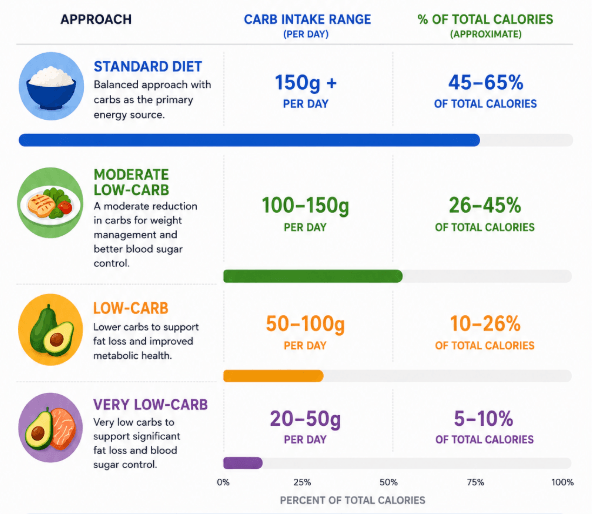
There is no single number that defines it. Low-carb can range from moderate to very restrictive:
Moderate low-carb (100–150g per day): This is easier to sustain and works well for general weight loss and energy. You can include most vegetables and some whole grains.
Low-carb (50–100g per day): More restrictive. Stronger appetite control and faster initial results for many people. Limits most grains and starchy vegetables.
Very low-carb (20–50g per day): Similar to the keto diet but slightly more flexible. It often produces the fastest short-term changes, but it is also the hardest to maintain and may increase the likelihood of side effects.
Low-Carb vs Keto vs Low-Fat
These three diets are often grouped together, but they’re not the same. Each one reduces something different:
- low-carb focuses on lowering carbohydrates
- keto pushes carbs extremely low to reach ketosis
- a low-fat diet prioritises reducing fat intake instead.
The structure, flexibility, and long-term sustainability can vary significantly depending on which approach you choose.
The table below highlights the key differences so you can see how they compare side by side.
| Low-Carb | Keto | Low-Fat | |
|---|---|---|---|
| Carbs per day | 50-150g | 20-50g | High (45-65% of calories) |
| Fat intake | Moderate to high | Very high | Low |
| Strictness | Flexible | Very strict | Moderate |
| Ease of adherence | High | Low to moderate | Moderate |
| Speed of results | Steady | Fast initially | Steady |
Why People Follow a Low-Carb Diet
People choose low-carb diets for different reasons, and not all of them are about rapid weight loss. Some prefer the simplicity of tracking carbohydrates instead of counting every calorie. Others notice fewer blood sugar spikes and crashes when carbs are reduced, which can mean steadier energy and fewer afternoon slumps.
For people with type 2 diabetes, lowering carbohydrate intake may also help improve blood sugar control, sometimes reducing medication needs under medical supervision.
There is also a practical side. Cutting back on carbs often means eating fewer ultra-processed foods, since many of them are built around refined grains and added sugars. And for some people, low carb simply feels easier. They stay fuller on protein and fat, snack less, and find the structure fits their lifestyle better than other approaches.
Ready to start a low-carb diet that’s easy to stick to? Get free, fully customized, and nutritionally balanced meal plans built around your carb limits, calories and goals.
Benefits of a Low-Carb Diet
A well-structured low-carb diet can lead to noticeable changes fairly quickly, especially in appetite, energy, and blood sugar control. The results depend on how it’s implemented and the quality of the foods chosen.
Weight Loss
Many people see the scale drop within the first week. Some of that early loss is water weight, since carbohydrates are stored with water in the body. After that initial shift, fat loss can follow if overall calorie intake is lower.
One reason low-carb diets can support weight loss is appetite control. Meals built around protein, vegetables, and healthy fats tend to keep people fuller for longer, which often makes it easier to eat less without feeling like they are constantly restricting.
Health Benefits
Lowering carbohydrate intake can improve blood sugar control, especially for people with type 2 diabetes or insulin resistance. Some individuals report fewer energy dips during the day and more stable mental focus. Triglyceride levels also often improve on blood tests.
That said, the benefits are not automatic. A low-carb diet based on whole foods will produce very different results than one built around processed, high-fat, low-carb products. Food quality still matters.
Risks and Side Effects
Lowering carbohydrates changes how your body uses fuel. For most people, the adjustment is temporary, but it can feel uncomfortable in the first week or two.
Common early side effects include:
- Headaches and fatigue – Sometimes called “carb flu” or “induction flu,” this happens as your body shifts toward burning more fat. It usually lasts 3–7 days.
- Constipation – Cutting carbs often means cutting fiber at first, especially if vegetables are not increased to compensate.
- Bad breath – As your body increases fat burning, certain byproducts can affect breath temporarily.
- Muscle cramps – These are often linked to fluid and electrolyte shifts.
These symptoms are usually short-lived and manageable with a few adjustments.
How to Reduce the Side Effects
Most early issues come from fluid and electrolyte changes, not from carbohydrates themselves. A few simple steps can make the transition smoother:
- Stay hydrated and replace electrolytes. Drink plenty of water and consider adding a pinch of salt to water occasionally. When carbs are reduced, your body releases stored water, which also shifts sodium levels.
- Prioritise fiber. Eat plenty of non-starchy vegetables. If needed, add chia seeds, ground flaxseed, or psyllium husk to support digestion.
- Do not cut calories aggressively at the start. Let your body adapt to lower carbs first. Once things feel stable, adjust calories if weight loss is your goal.
- Consider magnesium supplements. Your muscles might start to cramp as magnesium intake can drop when certain foods are reduced.
Who Should Be Extra Careful
Low-carb diets are not appropriate for everyone without supervision. If you fall under any of the categories below, make sure to consult with a health care professional before making any changes to your diet.
- People with type 1 diabetes as carbohydrate reduction significantly affects insulin requirements.
- Pregnant or breastfeeding women.
- People with kidney disease may need to limit protein, which is often higher on low-carb diets.
- Anyone with a history of eating disorders should approach carbohydrate restriction cautiously, as it can trigger restrictive patterns.
- People taking blood sugar–lowering medications may need dose adjustments under medical supervision.
What to Eat on a Low-Carb Diet

A low-carb diet works best when it’s built around whole foods, not just removing bread and sugar. The goal is to centre meals on vegetables and protein, use fats intentionally, and include carbohydrates strategically.
Non-starchy vegetables should make up the base of most meals. Leafy greens, broccoli, cauliflower, zucchini, peppers, mushrooms, asparagus, and green beans are all low in carbohydrates and high in fiber and nutrients. These can be eaten generously.
Protein sources such as eggs, chicken, fish, lean beef, pork, tofu, and tempeh help maintain muscle and keep you satisfied between meals.
Healthy fats including olive oil, avocado, nuts, seeds, and nut butters add flavour and satiety. They are calorie-dense, so they should be used deliberately rather than poured freely.
Quality carbohydrates in smaller portions can still fit depending on your target. Berries, beans, lentils, Greek yogurt, and quinoa provide fiber and nutrients without pushing carb intake excessively high.
Healthy Low-Carb Snacks
Snacks are optional, but if you need one, focus on protein or fat rather than refined carbs. The goal is to avoid turning “low-carb” into constant snacking on processed products.
Good options include:
- Unsweetened Greek yogurt with a few berries
- Hard-boiled eggs
- Cottage cheese (if tolerated)
- Almonds or other tree nuts
- Celery or peppers with guacamole
- Deli meat roll-ups with cheese
- Jerky (check for added sugar)
- Cheese sticks
The Simple Plate Method
If you don’t want to count grams, structure your plate visually:
- Half your plate: non-starchy vegetables
- One quarter: protein
- The remainder: healthy fats (half an avocado or similar)
- Optional: a small portion of quality carbs such as berries, beans, or a small serving of whole grains if your carb target allows
This approach keeps meals balanced and practical without needing to track every number.
Creating balanced low-carb meal plans that hit your carb targets and nutrient needs takes planning. If you want a low-carb meal plan personalized to your needs, automatically generate one complete with recipes and a grocery list with Eat This Much.
What to Avoid on a Low Carb Diet
A low-carb diet is less about banning foods and more about recognising where carbohydrates add up quickly. Many high-carb foods are obvious, but others are marketed as healthy or harmless. Knowing what to limit makes the diet much easier to follow consistently.
Try to avoid as much as possible the following:
- Sugary foods and drinks: Soda, fruit juice, sweetened coffee drinks, candy, and desserts are the fastest way to exceed your carb target. These spike blood sugar and rarely provide lasting fullness.
- Refined grains: White bread, regular pasta, white rice, and most breakfast cereals are high in carbohydrates and low in fiber. They digest quickly and often leave you hungry again soon after.
- Ultra-processed snacks: Chips, crackers, packaged baked goods, and snack bars can contain more carbohydrates than you expect, especially when portion sizes are small.
- “Low-fat” products: Many low-fat yogurts, sauces, and packaged foods replace fat with added sugar. Lower fat does not automatically mean lower carb.
- Hidden carbohydrates: Sauces, salad dressings, marinades, flavoured yogurts, and condiments often contain added sugars or starches. Reading labels on these items becomes important once you are actively tracking carbs.
Easy Low-Carb Swaps
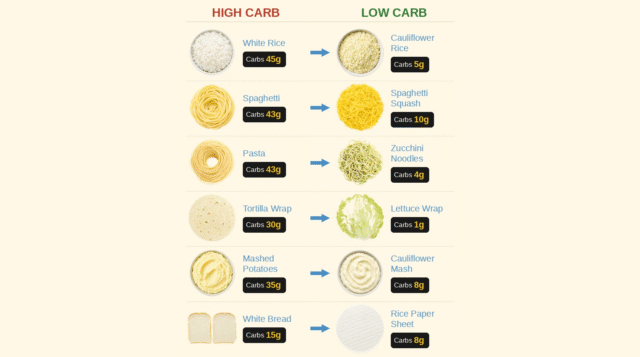
Making a few simple ingredient swaps can significantly reduce your daily carb intake without completely changing the meals you enjoy. Replacing foods like white rice, pasta, bread, and wraps with lower-carb alternatives such as cauliflower rice, zucchini, lettuce wraps, or rice paper sheets helps cut carbs while still keeping meals filling and satisfying.
These easy low-carb swaps are practical, widely available, and simple to incorporate into everyday cooking.
7-Day Low-Carb Meal Plan
Below is a simple example of what a balanced low-carb week can look like. It’s not a strict schedule, just a practical template to show how meals can be structured around vegetables, protein, and healthy fats while keeping carbohydrates controlled. Swap foods based on your preferences, budget, and carb target.
| Breakfast | Lunch | Dinner | Snack | |
|---|---|---|---|---|
| Monday | Scrambled eggs with spinach and avocado | Grilled chicken with side salad and olive oil dressing | Baked salmon with roasted asparagus and cauliflower mash | Cheese and almonds |
| Tuesday | Greek yogurt with almonds and berries | Ground beef lettuce wraps with cheese, cucumber, and tomato | Pork chops with roasted broccoli and peppers | Celery sticks with peanut butter |
| Wednesday | Omelet with mushrooms and cheese | Cobb salad with bacon, egg, avocado, and grilled chicken | Garlic butter chicken thighs with green beans | Hard boiled eggs |
| Thursday | Smoothie with almond milk, spinach, protein powder, and peanut butter | Tuna salad with cucumber and olives | Ground turkey with zucchini noodles and pesto | Macadamia nuts |
| Friday | Fried eggs with turkey bacon and tomatoes | Cauliflower rice bowl with shrimp and vegetables | Bunless beef burgers with salad and coleslaw | Olives and cucumber slices |
| Saturday | Cottage cheese with walnuts and cinnamon | Chicken Caesar salad without croutons | Grilled steak with sautéed spinach and mushrooms | String cheese |
| Sunday | Low-carb pancakes made with almond flour | Rotisserie chicken with roasted vegetables | Pork belly with broccoli and cauliflower cheese | Mixed nuts |
Creating balanced low-carb meal plans that hit your carb targets and nutrient needs takes planning. If you want a low-carb meal plan personalized to your needs, automatically generate one complete with recipes and a grocery list with Eat This Much.
How To Get Started on a Low-Carb Diet
Starting low-carb does not require a dramatic overhaul overnight. The most sustainable approach is structured, gradual, and practical. The goal is to lower carbohydrates while keeping meals balanced and realistic for your lifestyle.
Step 1: Decide How Low You’re Going
“Low carb” can mean 120 grams per day or 40 grams per day. Decide which range fits your goal. If you are focused on general weight loss and energy stability, a moderate low-carb approach is often easier to sustain. If you are targeting blood sugar control, you may choose a lower range under medical guidance.
Step 2: Remove the Obvious Carb Sources
Start with the biggest contributors: sugary drinks, desserts, white bread, pasta, and highly processed snacks. You do not need to eliminate every carb on day one, but removing the obvious sources creates immediate structure.
Step 3: Rebuild Your Meals
Do not just subtract carbs, replace them. Base meals around non-starchy vegetables and protein, then add healthy fats intentionally. If your plate is balanced, you will feel fuller and less tempted to snack. If meals feel small or unsatisfying, you likely need more protein or vegetables.
Step 4: Manage the First Week
Expect a brief adjustment period. You may feel slightly tired or foggy for a few days as your body adapts. Staying hydrated, adding salt to food, and not cutting calories aggressively at the same time helps reduce this transition phase. Most early discomfort passes within a week.
Step 5: Build a Routine You Can Maintain
Find 3–5 low-carb meals you enjoy and rotate them. Practice reading labels. Plan ahead before eating out. The goal is consistency, not perfection. A low-carb diet works best when it becomes predictable and simple, not when it feels extreme or temporary.
The Bottom Line
A low-carb diet can be an effective tool for weight loss, appetite control, and improving blood sugar for the right person. Many people find they feel fuller, snack less, and experience fewer energy crashes when carbohydrates are reduced thoughtfully.
But low carb is not magic. Results depend on food quality, overall calorie intake, and how sustainable the approach is for you. Replacing bread with vegetables and protein is very different from replacing it with processed “low-carb” products.
The key question is not whether low carb works in theory, but whether it works for your goals, health status, and lifestyle. If it helps you feel better and eat more intentionally, it may be a useful long-term strategy. If it feels restrictive or difficult to maintain, a more moderate approach may be a better fit.
Ready to start a low-carb diet that’s easy to stick to? Get free, fully customized, and nutritionally balanced meal plans built around your carb limits, calories and goals.
FAQs
What is the purpose of a low-carb diet?
The main purpose is to reduce carbohydrate intake so your body relies more on protein and fat for energy. For many people, this helps control appetite, stabilise blood sugar, and support weight loss. Some use it specifically to improve insulin resistance or manage type 2 diabetes under medical supervision.
How many carbs per day is considered low carb?
It depends on the approach. Moderate low-carb usually falls between 100–130 grams per day. Lower-carb plans range from 50–100 grams, and very low-carb plans can drop to 20–50 grams. The right level depends on your goals and how your body responds.
Will I lose weight on a low-carb diet?
You can, especially if lowering carbs helps you eat fewer calories overall. Many people feel fuller on protein and healthy fats, which makes it easier to reduce intake naturally. However, weight loss still depends on overall calorie balance.
Is low carb the same as keto?
No. Keto is a very low-carb approach designed to push the body into ketosis. Low carb is broader and can include higher carb ranges that do not necessarily lead to ketosis. You can eat low carb without following strict keto rules.
Are carbs bad for you?
Carbohydrates are not inherently bad. Whole-food carb sources like vegetables, fruit, and legumes provide fiber and nutrients. The issue is often refined carbohydrates and added sugars, not carbohydrates themselves.
Will I feel tired when eating low carb?
Some people experience temporary fatigue, headaches, or brain fog in the first few days as their body adjusts. Staying hydrated and maintaining electrolytes can help. These symptoms usually resolve within a week.
Can I exercise on a low-carb diet?
Yes. Light to moderate exercise is usually fine. High-intensity training may feel harder at first, but many people adapt over time. Athletes may need a slightly higher carb intake depending on performance demands.
Is a low-carb diet safe long term?
For many healthy adults, a well-planned low-carb diet can be safe long term. However, people with type 1 diabetes, kidney disease, or those taking blood sugar medications should consult a healthcare professional before making major changes. Food quality and balance remain important.