


You cut out bread for a week and suddenly feel better. You’re less bloated, have more energy, and even maybe experience fewer stomach issues. So you start wondering if gluten has been the problem all along. At the same time, you’ve probably heard the other side that going gluten-free is a fad and only people with celiac disease need it.
The truth sits somewhere in the middle. For some people, avoiding gluten is medically necessary. For others, it may reduce symptoms, and for many, it makes no meaningful difference at all. The key is understanding what gluten actually is, who truly needs to avoid it, and how to follow a gluten-free diet properly without turning it into a restrictive, nutrient-poor experiment.
Please talk to your doctor or healthcare professional before making any major changes to your diet plan.
Gluten-Free Diet at a Glance
- What is it: The gluten free diet eliminates all foods containing gluten, a protein found in wheat, barley, and rye
- Who needs it: People with celiac disease, gluten sensitivity, wheat allergy, or gluten ataxia
- Who doesn’t: Most people without a diagnosed condition (gluten-free doesn’t automatically mean healthier)
- Key challenges: Hidden gluten in sauces, processed foods, and cross-contamination risks
- Weight loss: No guaranteed weight loss just from being gluten-free
- Cost: Specialty products cost more, but whole foods are naturally gluten-free and cheaper
What Is a Gluten-Free Diet?
A gluten-free diet eliminates all foods and drinks containing gluten, which is a protein found mainly in wheat, barley, and rye. Gluten acts as a “glue” that helps foods keep their shape and texture.
When you eat gluten-free, you’re removing not just obvious foods like bread and pasta, but also many processed foods where gluten hides in sauces, seasonings, and thickeners. The goal is to avoid even small amounts of gluten.
The important thing to understand is that gluten-free is a medical necessity for some people and a lifestyle choice for others. It’s not inherently healthier for everyone.
Who Needs a Gluten-Free Diet?
A gluten-free diet is not necessary for everyone, but for certain individuals, it is essential. In these cases, avoiding gluten is not about preference or weight loss, it is about preventing real symptoms, long-term complications, and damage to the body.
Celiac Disease
Celiac disease is an autoimmune condition where eating gluten damages the small intestine. People with celiac disease must avoid gluten strictly and lifelong. This isn’t a choice, it’s a medical requirement. Even tiny amounts of gluten (as little as breadcrumb-sized) can trigger an immune response.
If you suspect celiac disease, don’t start a gluten-free diet before getting tested. Removing gluten can make the test inaccurate. Talk to your doctor first.
Gluten Sensitivity (Non-Celiac)
Some people experience digestive symptoms or other issues when eating gluten but don’t have celiac disease. This is called non-celiac gluten sensitivity. Symptoms can include bloating, fatigue, joint pain, and brain fog.
If you think you have gluten sensitivity, keep a food diary and talk to your doctor before eliminating gluten entirely.
Wheat Allergy
A wheat allergy is different from celiac disease or gluten sensitivity. It’s an allergic reaction to wheat proteins (not always gluten). People with wheat allergies need to avoid wheat but may tolerate other sources of gluten such as barley or rye.
Gluten Ataxia
Gluten ataxia is a neurological condition triggered by gluten in susceptible people. It’s rare, but it requires strict gluten avoidance like celiac disease. If you experience unexplained neurological symptoms, ask your doctor about gluten ataxia testing.
Does a Gluten-Free Diet Help with Weight Loss?
Going gluten-free doesn’t automatically cause weight loss. When people do lose weight on a gluten-free diet, it’s usually because they’re eating fewer processed foods overall, not because gluten itself causes weight gain.
Many gluten-free packaged foods are calorie-dense and high in sugar to improve taste and texture. If you’re eating lots of gluten-free snacks and baked goods, you won’t lose weight.
The best approach is to focus on whole foods (naturally gluten-free items) rather than manufactured gluten-free products.
Ready to start a gluten-free diet without the hassle? Get free, fully customised meal plans that help you avoid gluten while keeping your calories and nutrients balanced.
What to Eat on a Gluten-Free Diet
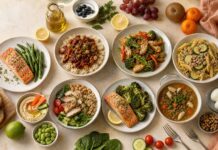
A gluten-free diet is often more flexible than people expect. Gluten is found in specific grains, not in most whole foods. Once you focus on what is naturally gluten-free rather than what you are removing, the diet becomes much easier to build. The foundation is simple: whole foods that do not rely on wheat, barley, or rye.
Naturally Gluten-Free Foods
- Fruits and vegetables – All fresh produce is naturally gluten-free. Eat them in any form: fresh, frozen, canned, or dried.
- Proteins – Fresh meat, poultry, fish, eggs, beans, lentils, nuts, and seeds are all naturally gluten-free when plain (watch out for seasoning mixes and marinades that may contain gluten).
- Dairy – Milk, cheese, butter, yogurt, and cream are naturally gluten-free. Check flavored yogurts and ice cream for gluten-containing additives.
- Gluten-Free Grains and Starches – Rice, potatoes, quinoa, buckwheat, corn, tapioca, arrowroot, amaranth, teff, and millet are all gluten-free. Many people think they can only eat rice, but variety matters for nutrition.
- Healthy Fats and Oils – Olive oil, coconut oil, avocado oil, nuts, seeds, and avocados are naturally gluten-free.
Foods to Avoid on a Gluten-Free Diet
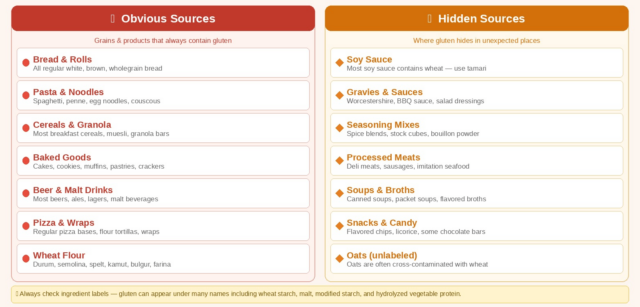
Avoiding gluten means more than just skipping bread and pasta. Gluten shows up in obvious places, but it also hides in ingredients and processed foods that do not immediately look like they contain wheat. The key is knowing both the grains that always contain gluten and the less obvious products where it can sneak in. Once you understand where it tends to hide, reading labels becomes much easier and the diet feels far less confusing.
Grains That Always Contain Gluten
Gluten is naturally found in wheat, barley, rye, and triticale. Any food made from these grains, including regular bread, pasta, cereals, flour, and most baked goods, will contain gluten unless specifically labelled gluten-free.
It is also important to recognise different names for wheat. Terms such as durum, semolina, farina, spelt, kamut, einkorn, and bulgur are all forms of wheat, even if the word “wheat” does not appear on the front of the package.
Hidden Sources of Gluten
This is where most people get caught out. Gluten does not just appear in obvious grain-based foods. It often shows up in ingredients and processed products that seem unrelated to wheat at first glance such as:
- Sauces and condiments – Soy sauce, Worcestershire sauce, gravies, and many salad dressings contain gluten. Look for tamari (gluten-free soy sauce) as a swap.
- Processed foods – Soups, broths, seasoning mixes, deli meats, imitation seafood, and flavored chips often contain gluten.
- Baked goods – Not just bread and pasta. Check: cookies, crackers, cereals, granola, and snack bars.
- Beverages – Most beer contains gluten (made from barley). Some whiskeys may contain gluten depending on processing.
- Other unexpected sources – Candy, sauces, marinades, spice blends, and thickened sauces can all hide gluten.
- Oats – Oats don’t naturally contain gluten, but they’re often contaminated with wheat during growing and processing. Only eat oats labeled “certified gluten-free” to be safe.
How to Avoid Accidental Gluten Exposure
Avoiding gluten is not only about ingredients. Gluten can transfer from one food to another through shared surfaces, utensils, or cooking equipment. For someone with celiac disease, even small traces can trigger symptoms, which is why these details matter.
At Home
Your kitchen is where you have the most control, but it is also where cross-contact happens most easily. Gluten does not need to be visible to cause a problem. Crumbs, shared utensils, and small habits like double-dipping into condiments can all undo your effort.
Hot spots to watch:
- Toaster (keep a separate toaster for gluten-free bread, or use toaster bags)
- Cutting boards (use separate ones or wash thoroughly)
- Shared butter, jam, and condiment jars (use clean utensils, never double-dip)
- Colanders and shared cooking utensils
- Flour dust in the air when cooking with regular flour
- Shared deep fryer oil
Prevention tips: Label gluten-free items clearly. Keep separate utensils for gluten-free cooking. Wipe down surfaces with a damp cloth before preparing gluten-free meals.
At Restaurants
Restaurants add another layer of unpredictability because you cannot see how food is prepared. Even if a dish is labelled gluten-free, it can still be exposed during cooking. Asking a few direct questions and knowing the most common risk areas makes eating out much safer.
High-risk areas:
- Shared deep fryers (chips may be fried in the same oil as breaded items)
- Pizza ovens (gluten dust everywhere)
- Pasta water splashing onto other foods
- Shared grill surfaces
- Prep areas where bread sits near your food
💡 Dining safety tip: The safest approach is to keep things simple and ask clear questions. Ask your server about preparation methods, request simple food (grilled chicken and vegetables are safer than complex sauces), and confirm separate utensils are used. When in doubt, ask if it’s been in a shared fryer or touched by gluten-containing foods.
At the Grocery Store
Shopping gluten-free gets easier once you know what to look for. Most mistakes happen because ingredients are skimmed rather than properly checked. A simple, consistent label-reading habit can prevent most accidental exposure. Use this quick three-step approach:
- Step 1: Scan the ingredient list for wheat, barley, rye, or malt. These are the big three gluten grains.
- Step 2: Check the allergen statement. Manufacturers must declare if the product “contains: wheat” or list gluten-containing ingredients.
- Step 3: Look for “gluten-free certification” if the product is labeled gluten-free, and check for “may contain gluten” warnings about shared facilities.
Maintaining Nutrition on a Gluten-Free Diet
Removing wheat-based foods does not automatically make a diet healthier. Many breads and cereals are fortified with B vitamins and iron, and whole grains provide an important source of fiber. If you cut them out, you need to replace those nutrients intentionally rather than relying on packaged gluten-free substitutes.
Common Nutritional Mistakes
One of the most common mistakes is ending up low in fiber. People remove wheat but do not replace it with other whole-food sources. Relying mostly on white rice or processed gluten-free bread can leave fiber intake lower than before.
Another issue is leaning too heavily on ultra-processed gluten-free products. Gluten-free cookies, crackers, and breads are often higher in sugar and lower in nutrients than the foods they replace. They can fit in occasionally, but they should not become staples.
There is also the risk of missing out on B vitamins and iron, which are often added to conventional wheat products. Without planning, intake of these nutrients can quietly drop.
The Gluten-Free Plate
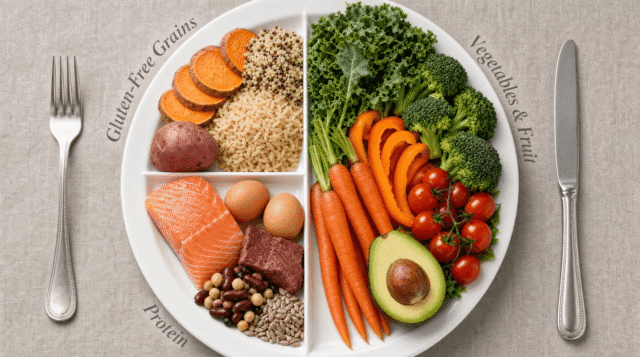
A simple way to keep meals balanced is to think in proportions rather than strict rules:
- Half of your plate – vegetables and fruit for fiber, vitamins, minerals
- Quarter of your plate – protein such as meat, fish, eggs, beans, or dairy
- Quarter of your plate – gluten-free whole grains or starchy vegetables like brown rice, quinoa, buckwheat, or potatoes
- Add – healthy fats such as olive oil, nuts, or avocado
7-Day Gluten-Free Meal Plan
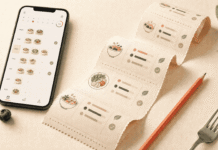
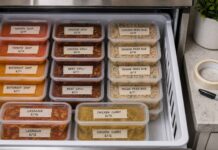
Below is a simple example of what a balanced gluten-free week can look like. This is not a rigid schedule, just a practical template to show how meals can be structured without relying on wheat-based staples. You can swap foods based on preference, budget, or availability, as long as the overall balance stays intact.
| Breakfast | Lunch | Dinner | Snack | |
|---|---|---|---|---|
| Monday | Eggs with gluten-free toast and fruit | Grilled chicken breast with brown rice and steamed broccoli | Baked cod with sweet potato and green beans | Apple with almond butter |
| Tuesday | Greek yogurt with certified gluten-free granola and berries | Home-made lentil soup with gluten-free bread | Chicken stir-fry with quinoa and mixed vegetables | Greek yogurt with berries |
| Wednesday | Omelette with mushrooms, peppers, and cheese | Baked potato topped with tuna and sweetcorn | Baked salmon with roasted potatoes and broccoli | Carrot sticks with hummus |
| Thursday | Smoothie with banana, berries, spinach, and almond milk | Bean and vegetable salad with olive oil dressing | Roast chicken, sweet potatoes, green beans | Orange and handful of almonds |
| Friday | Chia pudding with coconut milk and fresh fruit | Grilled chicken salad with olive oil vinaigrette | Chicken and avocado corn tortilla wraps | Banana with peanut butter |
| Saturday | Gluten-free pancakes with maple syrup and berries | Lentil and vegetable stir-fry with brown rice | Turkey meatballs with gluten-free pasta and tomato sauce | Yoghurt with nuts |
| Sunday | Veggie and egg white scramble with gluten-free toast | Turkey and vegetable soup | Grilled chicken with quinoa and steamed vegetables | Rice cakes with cream cheese |
Building gluten-free meal plans that keep you satisfied and nourished takes planning. If you want a gluten-free meal plan customized to your calories and food preferences, try our free meal plan generator, complete with recipes.
How to Get Started On a Gluten-Free Diet
Starting a gluten-free diet is much easier when you approach it step by step. The goal is not to panic and remove everything overnight, but to understand what you are doing and build a routine that feels manageable.
Step 1: Confirm You Actually Need a Gluten-Free Diet
Before going fully gluten-free, talk to your doctor. If you suspect celiac disease or a medical issue, testing for celiac disease needs to be done while you are still eating gluten. Knowing why you are going gluten-free makes it easier to stay consistent long term.
Step 2: Adjust Your Kitchen
Start at home, because that is where most exposure happens. Think about how gluten moves through your kitchen. Shared toasters, cutting boards, colanders, and condiment jars are common problem areas.
At the same time, stock your pantry with simple, naturally gluten-free staples. Rice, potatoes, beans, lentils, eggs, frozen vegetables, canned tomatoes, olive oil, nuts, and fruit make building meals straightforward.
Step 3: Rebuild Your Plate
Removing wheat is only half the job. You need to replace it properly. Build meals around vegetables, protein, gluten-free whole grains or starchy vegetables, and healthy fats. This keeps fiber, iron, and B vitamins from quietly dropping out of your diet.
Step 4: Build a Sustainable Routine
Find a few simple meals you enjoy and rotate them. Practice reading labels until it feels automatic. The first few weeks require more attention, but it should not feel stressful long term. The goal is normal eating without constant second-guessing.
Step 5: Ease Into Eating Out
Once you feel confident managing food at home, start applying the same principles when eating out. Restaurants add another layer of uncertainty, so it helps to begin with simple, straightforward meals.
Check menus online beforehand and look for grilled protein with vegetables or rice rather than complex dishes with multiple sauces. Ask direct questions about preparation, especially if you need to avoid cross-contact. Over time, this becomes easier, and you will learn which places handle gluten-free meals well.
The Bottom Line
A gluten-free diet is essential for some people and optional for others. For those with conditions like celiac disease, it is not a trend or preference, it is a medical requirement that protects long-term health. For others with gluten sensitivity, it may reduce symptoms. And for many people, it simply is not needed.
For those without these conditions, however, removing gluten may not offer clear health benefits and can sometimes make their diet more restrictive than necessary. Cutting out fortified grains without proper replacement can lower fiber, iron, and B vitamin intake if meals are not planned carefully.
The key is understanding your reason. If you need to go gluten-free, do it properly and build balanced meals around naturally gluten-free foods. If you do not medically require it, make sure you are not eliminating entire food groups without a clear purpose. When approached thoughtfully, a gluten-free diet can be sustainable and nutritious.
FAQs
Will I experience “gluten withdrawal” on a gluten-free diet?
There is no medical evidence that gluten itself causes a true withdrawal syndrome. However, some people feel headaches, fatigue, or cravings in the first week. This isn’t “withdrawal” but could be due to adjusting to a different diet pattern. Changes in fiber, caffeine, or sugar intake can affect how you feel. Symptoms typically settle within a few days as your diet stabilises.
Is a gluten-free diet healthier for everyone?
Not necessarily. A gluten-free diet can be healthy, but it depends on your food choices. Replacing whole grains with processed gluten-free snacks can lower fiber and nutrient intake. For people without a medical need, there is no strong evidence that removing gluten alone improves health.
Are oats allowed on a gluten-free diet?
Yes, if they are certified gluten-free. Oats don’t naturally contain gluten, but they are often contaminated with wheat during processing. If you have coeliac disease, always choose certified gluten-free oats.
Is gluten-free the same as low-carb?
No. Gluten-free removes specific grains that contain gluten. Low-carb reduces total carbohydrate intake. You can eat a high-carbohydrate gluten-free diet (rice, potatoes, fruit), or a low-carb diet that still contains gluten.