


Pasta with tomato and olive oil, grilled fish with lemon or warm bread dipped in hummus probably isn’t what comes to mind when you hear the word “diet.” That’s one reason the Mediterranean diet feels so different from many other ways of eating.
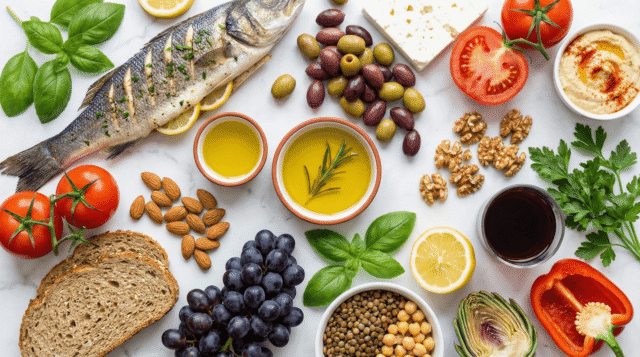
Mediterranean-style eating isn’t built around cutting out bread, avoiding fat or forcing yourself through meals you don’t enjoy. Instead, it makes vegetables, fruits, beans, whole grains, nuts and olive oil the foundation of satisfying everyday meals. Fish, dairy, eggs and meat can all have a place, and there’s no single menu everyone has to follow. It’s the overall balance of what you eat, rather than any one food or rigid rule, that matters most.
Please talk to your doctor or healthcare professional before making any major changes to your diet plan.
What Is the Mediterranean Diet?
The Mediterranean diet isn’t a strict diet with a fixed menu or a long list of rules. You don’t have to count calories, cut out entire food groups or eat the same meals every week. It’s a flexible way of eating based on the foods traditionally enjoyed in countries around the Mediterranean Sea.
Although it’s often associated with Greece, Italy and Spain, there’s no single Mediterranean cuisine. Meals vary across the region, but they tend to have a few things in common. Vegetables, fruits, beans, whole grains, nuts and olive oil make up much of what’s eaten, with fish and seafood appearing regularly. Poultry, eggs, yogurt and cheese are included in moderate amounts, while red meat, processed meat and sweets are eaten less often.
Food is only one part of the traditional Mediterranean lifestyle. Cooking at home, sharing meals with other people and staying active are also common. You don’t need to recreate that lifestyle perfectly, but its relaxed, practical approach is one reason this way of eating can fit into everyday life.
The Mediterranean Diet Pyramid Explained
The traditional Mediterranean diet pyramid looks different from the standard food pyramids many people grew up with. Instead of centering meals around meat and processed grains, it places plant based foods at the foundation.
Vegetables, fruits, whole grains, beans, nuts, seeds and olive oil make up the largest part of the pyramid because they’re eaten most often. Fish and seafood are eaten regularly but in smaller amounts, while poultry, eggs, yogurt and cheese are included in moderation. At the very top, in the smallest section, are red meat and sweets, foods meant to be enjoyed occasionally rather than daily.

Many Mediterranean diet pyramids also include physical activity and shared meals at the base, since this way of eating has traditionally been part of a more active and social lifestyle.
| Pyramid Level | Foods | Frequency | Purpose |
|---|---|---|---|
| Base (Eat Daily) | Vegetables, fruits, whole grains, legumes, nuts, herbs, olive oil | Every meal | Foundation, fiber, sustained energy |
| Middle (Eat Weekly) | Fish, seafood, poultry, eggs, cheese, yogurt | 2-3x per week | Protein, omega-3s, calcium |
| Top (Eat Rarely) | Red meat, processed meats, sweets, refined carbs | Occasional | Flavor, special occasions |
| Lifestyle Pillars | Physical activity, social eating, rest, community | Daily | Sustainability, mental health |
Interested in a simple, stress-free way to follow the Mediterranean diet? Get a free, fully customized Mediterranean meal plan matched to your calorie and nutrient needs.
Why the Mediterranean Diet Works
There’s no single food behind the reason why the Mediterranean diet works for many people. They come from regularly eating more vegetables, beans, whole grains, fish and olive oil, and less processed meat and heavily processed food.
It’s also flexible enough to stick with. You don’t have to get every meal right, and eating dessert or ordering a takeaway occasionally doesn’t mean you’ve failed. What you eat most of the time is what counts.
Health Benefits of the Mediterranean Diet

The Mediterranean diet is often described as “heart healthy,” but that phrase only tells part of the story. Its benefits come from the way it shapes everyday eating habits and how those habits affect the body over time.
It’s also one of the most studied dietary patterns in the world. Researchers have examined it in populations known for long life expectancy and lower rates of chronic disease, and the findings have been consistently positive.
Protects the Heart & Cardiovascular System
The Mediterranean diet reduces cardiovascular risk in several ways. Antioxidants in olive oil and plant foods help prevent the oxidation of LDL particles, a key step in artery damage. Olive oil and fish can help raise HDL levels, while reduced intake of refined carbohydrates and higher fiber intake help lower triglycerides.
One of the strongest pieces of evidence comes from the PREDIMED trial, which followed more than 7,000 participants for five years. Those assigned to a Mediterranean-style diet experienced about 30% fewer major cardiovascular events compared to a control group on a low-fat diet.
Reduces Inflammation
The Mediterranean diet naturally lowers chronic inflammation. Extra virgin olive oil, fatty fish, vegetables, legumes, and whole grains provide polyphenols, omega-3 fatty acids, and fiber. Together, these nutrients help reduce inflammatory markers in the body, which are linked to heart disease, diabetes, and cognitive decline.
Controls Blood Sugar
Meals built around fiber and healthy fats slow the absorption of glucose (sugar) into the bloodstream. This helps prevent sharp blood sugar spikes and crashes.
A meal based on refined white bread is digested quickly, causing blood sugar to rise rapidly. The pancreas releases insulin, and blood sugar may fall soon after, often leading to hunger within a couple of hours.
In contrast, a meal centered on legumes, vegetables, and olive oil is digested more slowly. Blood sugar rises gradually, insulin response is steadier, and energy levels tend to remain more stable. This pattern is one reason the Mediterranean diet is associated with improved insulin sensitivity and a lower risk of type 2 diabetes.
Improves Gut Health
The gut microbiome plays a big role in immune function, metabolism, inflammation, and even mood. To thrive, beneficial gut bacteria need a variety of fibers from different plant sources.
The Mediterranean diet provides that diversity through vegetables, legumes, whole grains, nuts, and seeds. Studies show that individuals following this pattern tend to have greater diversity of beneficial bacterial species, which is linked to better long-term health outcomes.
Supports Weight Management & Fat Loss
The Mediterranean diet emphasises vegetables, legumes, whole grains, healthy fats, and lean proteins, foods that are naturally filling and nutrient-dense. Fiber and healthy fats help control appetite, while reducing ultra-processed foods lowers overall calorie intake without requiring strict rules.
Because of this, many people naturally eat less without feeling deprived. When followed in a calorie deficit, the pattern tends to support gradual, sustainable weight loss, often averaging around 1 to 2 pounds per week rather than rapid, short-term results.
Helps Manage Type 2 Diabetes
The Mediterranean diet is strongly associated with healthier blood sugar levels over time. It has been linked to a lower risk of developing type 2 diabetes and better long-term blood sugar control in people who already have it
One reason is that meals built around fiber-rich plants and healthy fats digest more slowly, which helps prevent sharp spikes and crashes. Steadier blood sugar, combined with reduced inflammation, makes it easier for the body to manage insulin effectively.
Supports Brain Health & Cognitive Function
Mediterranean-style eating has been linked to slower cognitive decline with aging. Some long-term studies have found that the Mediterranean diet reduced cognitive decline by 20% in people over 60. This may be due to reduced inflammation, improved cardiovascular health, and the inclusion of omega-3 fats from fish, all of which support brain function over time.
Linked to Longer Life Expectancy
People living in Mediterranean regions are known for longer life expectancy and lower rates of chronic disease. Areas such as Ikaria, Greece, have an unusually high number of people living into their 100s and beyond.
Diet is not the only reason. Physical activity, strong social ties, and lower stress levels also play important roles. However, the consistent pattern of whole foods, healthy fats, minimal processing, and shared meals appears to contribute meaningfully to long-term health.
Health Conditions to Consider Before Starting the Mediterranean Diet
The Mediterranean diet is generally safe and well tolerated for most people. However, certain health conditions may require a conversation with your healthcare provider before making major dietary changes.
- Chronic kidney disease: The diet includes many potassium-rich foods such as vegetables and legumes. If kidney function is impaired, potassium levels may need to be monitored. It is important to speak with your doctor before increasing intake significantly.
- Medical situations requiring rapid weight loss: If a doctor has recommended very rapid weight loss, such as before surgery, a more structured and closely monitored plan may be necessary. The Mediterranean diet is flexible by design and may not provide the level of precision required in those cases.
- Food allergies or intolerances: If you are allergic to fish or nuts, the diet can still be adapted. You may simply need to find alternative sources of key nutrients, such as omega-3 fats from seeds or algae-based supplements.
For most people, however, the Mediterranean diet is not extreme or restrictive. It can be adjusted to fit different preferences and health needs while maintaining its core principles.
What to Eat on the Mediterranean Diet
Food on the Mediterranean diet is straightforward. You’re eating what humans evolved eating in this region for thousands of years. That means no manufactured products, no artificial sweeteners, no highly processed snacks.
The structure is flexible. There’s no “you must eat this much” or “never eat that.” It’s guidance. Eat more of the good stuff. Eat less of the bad stuff. That’s it.
Mediterranean Diet Food List
| Food Category | Eat Daily | Eat Weekly | Limit |
|---|---|---|---|
| Vegetables | Leafy greens, tomatoes, cucumbers, peppers, onions, garlic, zucchini, eggplant, broccoli | All vegetables | Fried vegetables |
| Fruits | Apples, oranges, berries, grapes, pears, melons | Figs, dates (portion controlled) | Fruit juice, dried fruit excessive amounts |
| Grains | Whole grain bread, brown rice, farro, oats, quinoa, barley | Pasta (whole grain) | White bread, white rice, refined cereals |
| Proteins | Legumes, beans, lentils | Fatty fish (salmon, sardines, mackerel), poultry, eggs, nuts, seeds | Red meat, processed meats, high-sodium options |
| Dairy | Greek yogurt, cheese (small portions) | Full-fat daily consumption | |
| Fats | Extra virgin olive oil (primary) | Nuts, seeds, avocado | Butter, margarine, vegetable oils |
| Beverages | Water, tea, coffee | Wine (optional, 1 glass with meals) | Sugary drinks, excessive alcohol |
| Herbs & Spices | Oregano, basil, thyme, rosemary, garlic, lemon | All varieties | Large amounts of salt |
Want a fully customized Mediterranean meal plan matched to your specific calorie and nutrient needs? Eat This Much generates personalized weekly meal plans automatically, adjusting portions and recipes to your goals while keeping the Mediterranean principles intact.
Foods to Limit or Avoid
The Mediterranean diet is not built around strict elimination, but certain foods are clearly eaten less often.
Processed meats such as bacon, deli meats, sausage, and ham are best limited. These foods were not part of traditional Mediterranean eating patterns and are associated with a higher risk of heart disease.
Refined grains like white bread, white rice, and standard pasta are typically replaced with whole-grain versions. Whole grains provide more fibre and support steadier blood sugar levels.
Sugary beverages including soda, energy drinks, sweetened coffee drinks, and even large amounts of fruit juice are not part of the traditional pattern. Water is the primary beverage, with wine consumed occasionally and usually with meals.
Ultra-processed snacks such as packaged cookies, chips, and candy also fall outside the core structure of the diet. These foods simply were not part of the traditional food environment when this eating style developed.
Importantly, this approach is about reduction, not perfection. Red meat can still be enjoyed occasionally. Dessert can still have a place. What matters most is the overall pattern, the foods you eat most of the time, not the small percentage reserved for special occasions.
Can You Lose Weight on the Mediterranean Diet?
Yes, you can lose weight on the Mediterranean diet. Like any approach, it comes down to being in a calorie deficit. The difference is that this style of eating often makes that deficit easier to maintain because the meals are satisfying and balanced.
It is not designed as a rapid weight-loss plan. Instead, it is a long-term, health-focused way of eating. Weight loss tends to happen as a result of improved food quality and better appetite control, rather than strict rules or extreme restriction.
When your plate is built around vegetables, beans, whole grains, olive oil, fish, and simple proteins, you stay full longer. That makes it easier to eat less without feeling deprived or constantly hungry.
Results are typically gradual, often around 1 to 2 pounds per week when calories are controlled. The real advantage is sustainability. Without extreme rules or banned food groups, it is easier to maintain long term, and consistency is what ultimately determines whether weight stays off.
7-Day Mediterranean Diet Meal Plan
To make this practical, below is a sample 7-day plan to show what Mediterranean-style eating can look like in practice. Use it as inspiration, not a strict schedule, and adjust meals based on your preferences and what you have available.
| Breakfast | Lunch | Dinner | Snack | |
|---|---|---|---|---|
| Monday | Greek yogurt with berries and walnuts | Chickpea salad with olive oil, feta, tomatoes | Grilled salmon with roasted vegetables and whole grain rice | Apple with almonds |
| Tuesday | Oatmeal with almonds, banana, cinnamon | Tuna salad on whole grain bread with mixed greens | Lentil stew with side salad and olive oil | Handful of olives |
| Wednesday | Whole grain toast with tomato, olive oil, oregano | Mediterranean vegetable soup | Grilled chicken breast with roasted peppers and brown rice | Berries |
| Thursday | Eggs (2) with sautéed spinach and whole grain toast | White bean salad with cucumber and herbs | Baked cod with roasted broccoli and sweet potato | Cheese and crackers |
| Friday | Greek yogurt with granola and figs | Falafel wrap with hummus and vegetables | Pasta (whole wheat) with tomato sauce, minced turkey, side salad | Grapes |
| Saturday | Vegetable omelet with feta cheese | Grilled vegetable and halloumi salad | Spanish paella with seafood, vegetables, brown rice | Walnuts and an orange |
| Sunday | Overnight oats with chia seeds, berries, almonds | Leftover paella with side salad | Grilled sardines with roasted root vegetables and greens | Herbal tea with dates |
How to Get Started with the Mediterranean Diet

Getting started doesn’t require a complete overhaul overnight. Small, consistent changes tend to stick better than dramatic shifts.
Step 1: Replace Butter with Olive Oil
Butter can still have a place occasionally, but olive oil becomes your primary cooking fat. Use it for cooking, dressing salads, or drizzling over vegetables and bread. Extra virgin olive oil is especially valued for its antioxidant content.
Step 2: Build Meals Around Vegetables
Vegetables should not just be a side dish. Aim to make them a central part of most meals, ideally filling about half your plate. They form the foundation of the Mediterranean pattern.
Step 3: Include Fish Regularly
Try to eat fish at least twice per week, especially fatty varieties like salmon, sardines, or mackerel. In traditional Mediterranean eating, fish is a primary protein source, while red meat plays a much smaller role.
Step 4: Swap Refined Grains for Whole Grains
Gradually replace refined grains with whole-grain options. White bread can become whole-grain bread. White rice can be swapped for brown rice or farro. Regular pasta can be replaced with whole wheat versions. If the change feels drastic, start by mixing refined and whole grains while your taste preferences adjust.
Step 5: Reduce Red Meat
Red meat doesn’t need to disappear from the menu, but it shifts from a weekly staple to an occasional food. Make poultry, fish, legumes, and plant-based proteins the more frequent choices.
Want a fully customized Mediterranean meal plan matched to your specific calorie and nutrient needs? Eat This Much generates personalized weekly meal plans automatically, adjusting portions and recipes to your goals while keeping the Mediterranean principles intact.
How to Make the Mediterranean Diet Budget-Friendly
The Mediterranean diet is often assumed to be expensive, but it doesn’t have to be. With a little planning, it can be surprisingly affordable.
Here are some practical ways to keep costs down:
- Use dried beans and lentils. Dried chickpeas can be up to 10 times cheaper than canned. They take a little more effort since you need to soak and cook them, but one pound usually costs around $1 and makes enough for 6 to 8 servings. That makes them one of the cheapest protein options available.
- Buy frozen fish. Frozen salmon is often cheaper than fresh and just as nutritious. Look for sales or bulk packs to bring the cost down even more.
- Buy seasonal produce. Fruits and vegetables cost less when they’re in season. Tomatoes in summer are far cheaper than in winter. Build meals around what’s currently affordable.
- Buy whole grains in bulk. Brown rice, oats, farro, and quinoa are inexpensive when bought in larger bags. Bulk bins or warehouse stores usually offer the best value.
- Make olive oil last. A bottle of extra virgin olive oil may cost $8 to $12, but it typically lasts two to three weeks. Spread across meals, that often works out to around $0.50 per serving.
- Buy eggs. Eggs are still one of the most affordable complete proteins. Buying larger cartons when they’re on sale can reduce the cost even further.
A simple Mediterranean-style meal, such as fish or beans with vegetables, whole grains, and olive oil, can cost around $4 to $6 per serving. In many cases, that’s cheaper than eating out or relying on packaged convenience foods.
The Bottom Line
The Mediterranean diet remains one of the most well-supported eating patterns in nutrition research, not because it relies on extremes, but because it brings balance back to everyday meals. By focusing on vegetables, whole grains, legumes, olive oil, fish, and moderate portions, it improves overall diet quality in a way that most people can maintain.
Its strength lies in sustainability. There are no rigid rules, no obsessive tracking, and no need to eliminate entire food groups. Instead of chasing rapid results, it supports steady progress that builds over time. Research consistently shows improvements in cardiovascular health, blood sugar control, inflammation levels, and long-term weight management, largely because the pattern is realistic enough to follow consistently.
For many people, the real challenge is not understanding what to eat but planning it week after week. Having structure makes consistency easier. Tools like Eat This Much can help generate personalized Mediterranean-style meal plans that align with your calorie needs and lifestyle, removing the daily guesswork and making it more practical to follow in a busy lifestyle.
The Mediterranean diet is not dramatic, restrictive, or trend-driven. It is a long-term way of eating that fits into real life, and that is precisely why it works.
Ready to get started on your Mediterranean journey? Get a free, fully customized Mediterranean meal plan matched to your specific calorie and nutrient needs today.
Frequently Asked Questions
Is wine allowed on the Mediterranean diet?
Yes, in moderation and usually with meals. Traditional Mediterranean eating includes wine, but it is optional, not required. Moderate intake generally means up to one glass per day for women and one to two for men. Drinking with food slows absorption and often leads to lower overall intake.
Is the Mediterranean diet anti-inflammatory?
Yes. Olive oil, fish, vegetables, legumes, and whole grains contain compounds such as polyphenols and omega-3 fats that are linked to lower levels of chronic inflammation. Research shows meaningful reductions in inflammatory markers among people who follow this pattern consistently.
Can the Mediterranean diet be vegetarian or vegan?
Yes. A vegetarian version works easily by focusing on legumes, nuts, seeds, eggs, dairy, and whole grains for protein. A vegan version is also possible, though it requires more attention to protein intake and nutrients such as vitamin B12, which usually needs supplementation.
Is the Mediterranean diet gluten-free?
Not by default. Traditional Mediterranean eating includes whole-grain bread and pasta. However, it can be adapted by choosing gluten-free grains such as rice, quinoa, or gluten-free pasta alternatives.
How quickly will I see results on the Mediterranean diet?
It depends on what you’re looking for. Many people notice changes in energy or digestion within the first couple of weeks. Weight loss can begin early as well, often within 1 to 2 weeks, though some of that initial drop is water weight. After that, progress is usually steady, around 1 to 2 pounds per week if you’re in a calorie deficit.
Can I eat eggs daily on the Mediterranean diet?
Yes. Eggs are part of traditional Mediterranean eating and can be included regularly. For most healthy people, one to two eggs per day is perfectly reasonable as part of a balanced diet.
Do I need to count calories?
Not necessarily. Many people naturally eat less because meals are filling and balanced. However, if weight loss stalls or goals are not being met, tracking intake can help identify areas to adjust.
Can I drink coffee on a Mediterranean diet?
Yes. Coffee is commonly consumed in Mediterranean countries. For most people, two to four cups per day is considered safe. Black coffee or coffee with a small amount of milk fits easily within the diet.